The Data Center Land Rush: What $100 Billion in AI Infrastructure Commitments Actually Buys
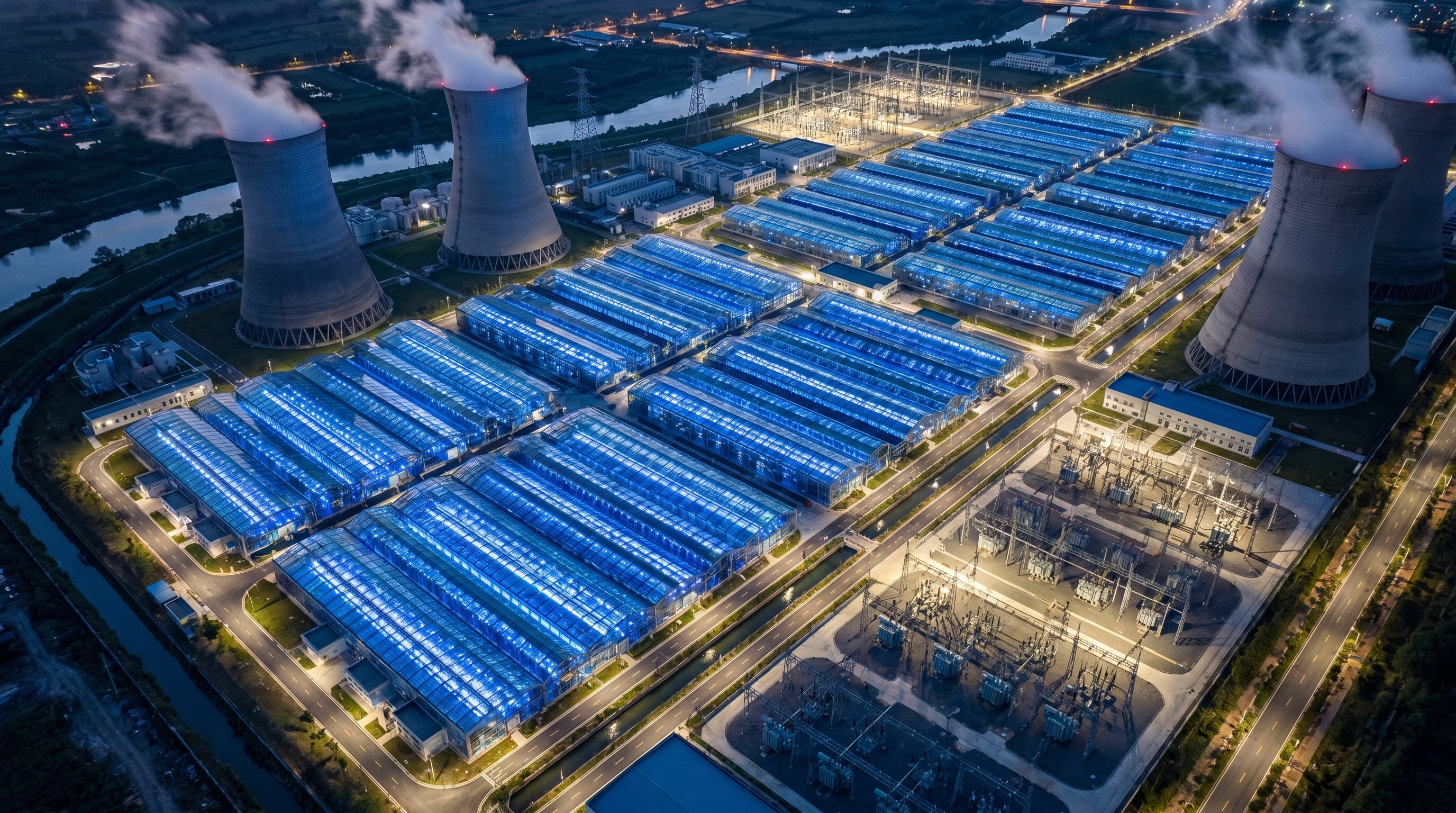
In 2026, the numbers being thrown around AI infrastructure spending have become almost comically large. Microsoft committed $80 billion for fiscal 2026. Google's capital expenditure hit $75 billion across 2025 and 2026. Amazon expects to spend more than $100 billion through 2028. SoftBank pledged $100 billion to US AI infrastructure. Meta guided $65 billion in 2025 capital spending. Add it up and you're looking at something north of half a trillion dollars — all notionally pointed at the same goal: building the physical substrate for AI at scale.
The question worth asking is not whether these numbers are real. They mostly are. The question is what they actually buy, who captures the value, and whether the spending wave is building toward a permanent advantage or a very expensive land rush that will eventually hit a wall.
What the money actually goes toward
Data center construction sounds simple: big buildings, lots of servers. The reality is more layered. The biggest cost in a modern AI data center is not the building — it is the compute. A single Nvidia H200 GPU costs roughly $30,000 to $40,000. An NVL72 rack housing 72 of them runs $3 million or more. A hyperscaler buying 100,000 GPUs (a conservative estimate for a major training cluster) is spending $3 to $4 billion before a single server is racked.
Nvidia's GB200 Blackwell architecture, which began shipping in volume in late 2025, extended the premium further. A 72-GPU NVL72 Blackwell rack is priced at roughly $3.5 million, and demand has outpaced supply by wide margins. This creates an unusual dynamic: the companies spending the most on AI infrastructure are largely funneling that money to a single supplier. Nvidia captured about 92% of data center GPU revenue in 2025. The infrastructure land rush, in financial terms, is largely a Nvidia wealth transfer.
Below the GPU layer, the money spreads out. Networking (InfiniBand, Ethernet at 400G/800G) is expensive. Cooling — traditional CHWS chilled water and increasingly direct liquid cooling (DLC) for high-density GPU racks — adds $1 to $3 million per megawatt of capacity. Buildings themselves in tier-1 markets (northern Virginia, Phoenix, Chicago) are bid up, with construction timelines stretching 18 to 36 months. And then there is power.
Power is the real bottleneck
A 100-megawatt data center — a meaningful but not exceptional size for an AI cluster — needs roughly the output of a small power plant operating continuously. At 1 gigawatt, which is the scale hyperscalers are now targeting for single campuses, you need something like the Hoover Dam running just for that facility. Utilities are not built for this kind of step-change demand.
The Federal Energy Regulatory Commission's June 2026 order requiring grid operators to fast-track large-load interconnection (FERC's "show cause" orders to all six regional grid operators) is a direct response to hyperscalers running into power capacity ceilings. In PJM — the grid covering most of the US East Coast and Midwest — there is a 400 gigawatt backlog of interconnection requests. A data center that qualifies its site today might wait four to six years for reliable grid hookup.
Hyperscalers are adapting by co-locating with power generation directly. Microsoft has signed agreements with Constellation Energy and other nuclear operators to restart or license existing nuclear capacity. Google has contracted with Kairos Power for small modular reactors (SMRs). Amazon acquired Talen Energy's data center campus adjacent to a 2.5 GW nuclear plant in Pennsylvania. The pattern is unmistakable: the next phase of AI infrastructure is also an energy infrastructure buildout, with data centers competing with cities for scarce grid capacity.
New entrants and why hyperscale is no longer just for hyperscalers
The capital requirements of AI infrastructure have created an unusual opening for financial buyers. CoreWeave, backed by Nvidia equity and debt financing, reached a $23 billion valuation by 2025 and went public in early 2026, becoming one of the fastest-growing infrastructure companies in history. Its model — buy GPUs at scale, rent them out to AI developers who need burst capacity — works precisely because hyperscalers have allocated most of their own GPU capacity to internal workloads.
Adam Selipsky, the former AWS CEO, launched Helix Digital Infrastructure in June 2026 with $10 billion in committed capital from KKR, a Nvidia partnership, and Kuwait's sovereign wealth fund as an anchor investor. The pitch is vertical integration: data centers, power generation, transmission, and fiber under one roof. Crusoe Energy built a similar integrated model starting from stranded natural gas flaring on oil fields. The thesis in all these cases is that owning the full stack — compute, power, connectivity — produces margin that cannot be competed away.
Who actually captures the value
In any infrastructure build-out, the suppliers to the build-out often do better than the builders themselves. The railroad era enriched steel companies, not just railroad operators. The internet buildout enriched Cisco and cable companies. The AI infrastructure wave is following a similar pattern:
Nvidia captures the most direct value, with 70%-plus gross margins on its data center products. Demand backlog extends well into 2027. AMD's MI300X has made inroads, and Google's TPUs are competitive internally, but Nvidia's CUDA ecosystem creates switching costs that commodity GPU vendors have struggled to overcome.
Power utilities like Constellation, Vistra, and NRG Energy have seen their stock prices roughly double over 2024-2025 as the AI demand signal reached electricity markets. Nuclear operators in particular are benefiting, since nuclear provides the always-on baseload that AI training workloads require.
Data center REITs like Equinix and Digital Realty are benefiting from co-location demand, though hyperscalers building their own facilities limit how much the REITs capture from first-party AI buildouts.
The less certain value capture belongs to the hyperscalers themselves. The question of whether $500 billion in infrastructure spending generates commensurate AI application revenue is not settled. The cloud era analogy is encouraging — AWS, Azure, and GCP combined generate over $400 billion in annual run-rate revenue — but the AI application layer is earlier and less certain. Hyperscalers are making the bet that capacity constraints today become competitive moats tomorrow.
What this means in practice
For developers and startups, the infrastructure land rush has a paradoxical effect: it should make compute cheaper over time (more capacity, more competition) but more expensive in the short term (demand exceeds supply, spot prices elevated). Firms that locked in committed contracts for GPU access in 2024-2025 are sitting on a meaningful advantage. Those entering the market now are paying elevated spot rates or joining long waitlists.
For enterprises evaluating AI infrastructure strategy, the key insight is that build vs buy is increasingly a question of timeline and workload characteristics. General-purpose inference and experimentation belongs on managed cloud APIs. Training large proprietary models, running persistent high-throughput inference at scale, or operating in highly regulated environments (where data cannot leave your control) justifies owned or dedicated infrastructure — but with the understanding that power access is now a site selection constraint as important as network connectivity was in the 2000s.
The land rush will not last forever. Once power and construction backlogs clear — likely 2027-2028 — the availability of GPU capacity will normalize. The companies that secure power access, relationships with chip suppliers, and a track record of operating at scale during the constrained period will have a structural advantage. The rest will be able to rent what they need. Which side of that line a company ends up on may be determined by decisions made in the next 18 months.