California Sues BP, Walmart, and Four Other Gas Chains for Using AI to Coordinate Price Increases
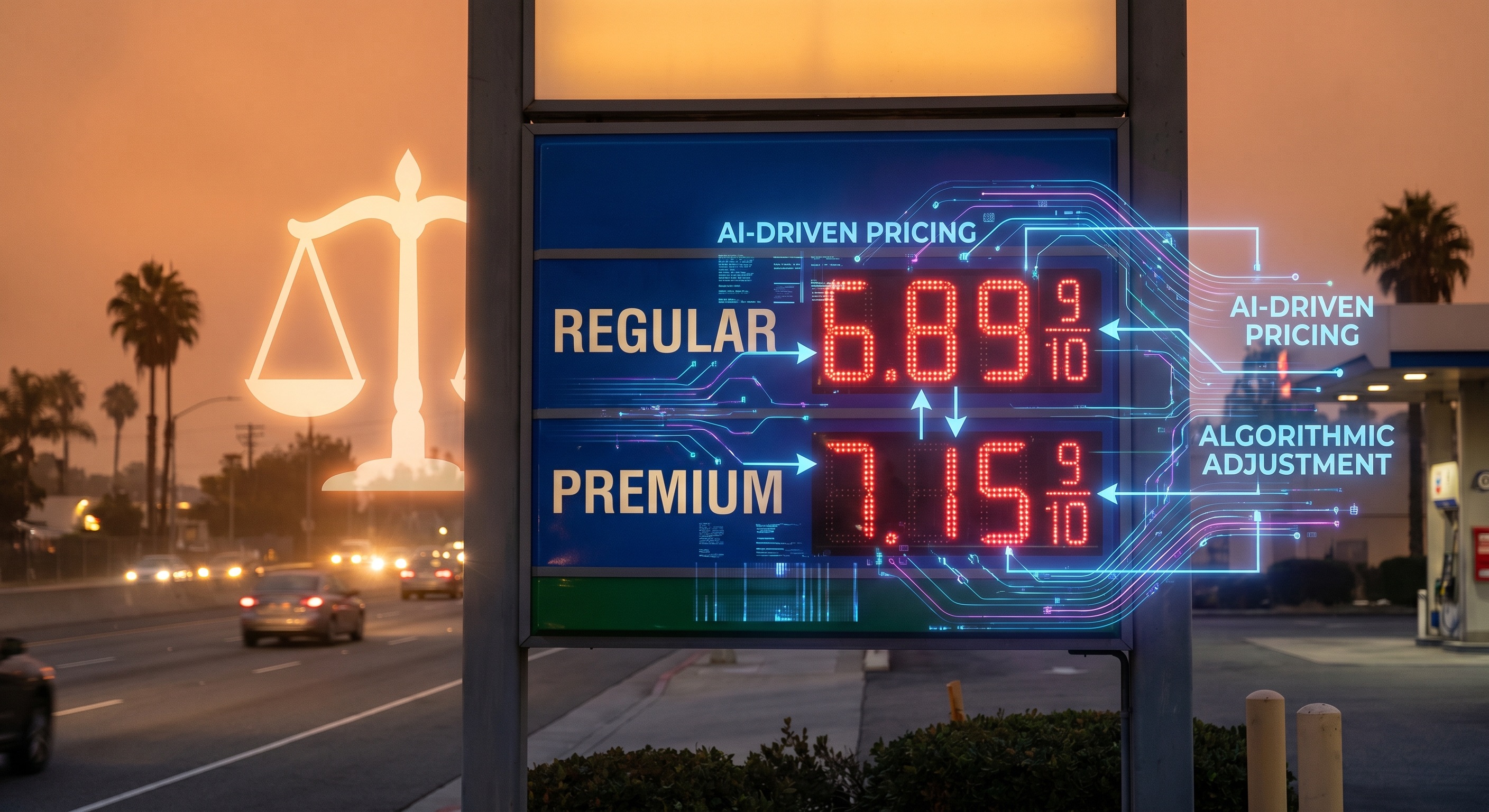
California consumers filed a class-action lawsuit on Monday against six of the state's largest fuel retailers — BP, Marathon Petroleum, 7-Eleven, Walmart, Circle K, and Albertsons — accusing them of using an AI-powered pricing algorithm to collectively inflate gas prices across more than 1,700 filling stations. The complaint, filed in federal court in Sacramento, alleges the companies violated California Assembly Bill 325, a law that took effect on January 1, 2026, and is one of the first cases to test whether sharing an AI pricing tool constitutes illegal price-fixing under state antitrust law, as reported by Bloomberg.
The tool at the center of the case is Kalibrate Fuel Systems, a commercial pricing algorithm that adjusts pump prices automatically based on data shared among participating retailers. The complaint alleges that by subscribing to the same tool and feeding it confidential pricing data, the defendants effectively coordinated their prices in a way that would be illegal if done through a human cartel. Gas prices in parts of California had already reached above $7 a gallon in some areas during a period of elevated energy costs tied to U.S.-Iran tensions; the lawsuit alleges Kalibrate inflated prices by an additional 22 cents per gallon for regular gasoline and 33 cents per gallon for diesel on top of that baseline.
The math on the alleged harm is significant. Every additional penny per gallon in California costs the state's drivers approximately $134 million per year, according to the complaint. A 22-cent inflation, sustained across 1,700-plus stations, represents a transfer of billions of dollars from California consumers to the defendant fuel retailers over the period covered by the lawsuit.
AB 325, the legal basis for the suit, was explicitly drafted with AI-driven pricing in mind. The law makes it unlawful to "use or distribute a common pricing algorithm as part of a contract, combination in the form of a trust, or conspiracy to restrain trade." The statute was a direct response to a growing body of economic research and litigation arguing that when competing businesses use the same algorithmic tool — even without directly communicating — the tool itself can function as a mechanism for cartel-like coordination. Similar arguments have been made in rental housing cases involving the RealPage algorithm, where landlords who shared the same software were accused of effectively colluding on rents without exchanging a word.
The legal stakes here extend well beyond gas prices. If the California court finds that the defendants violated AB 325 by using Kalibrate, it will establish an important precedent: that adopting a shared pricing algorithm creates antitrust exposure, regardless of whether the companies coordinated directly. Equally significant is the question of whether Kalibrate itself — as the tool's distributor — shares in the liability. AB 325's text covers both users and distributors of common pricing algorithms, which means the fuel companies and the software vendor could both face legal consequences.
All six defendant companies have declined to comment publicly on the lawsuit. Kalibrate, which markets itself as the industry standard for fuel retail pricing optimization and operates in more than 60 countries, also did not respond to requests for comment. The case is expected to be closely watched by retail operators across industries that rely on commercial pricing software — from airlines to hotels to grocery chains — where shared algorithmic tools have become standard infrastructure.
Originally reported by Bloomberg. Read the original article for additional details.
View original source