SpaceX Signs $6.3 Billion Compute Deal with Reflection AI for Nvidia GB300 Access at Colossus 2
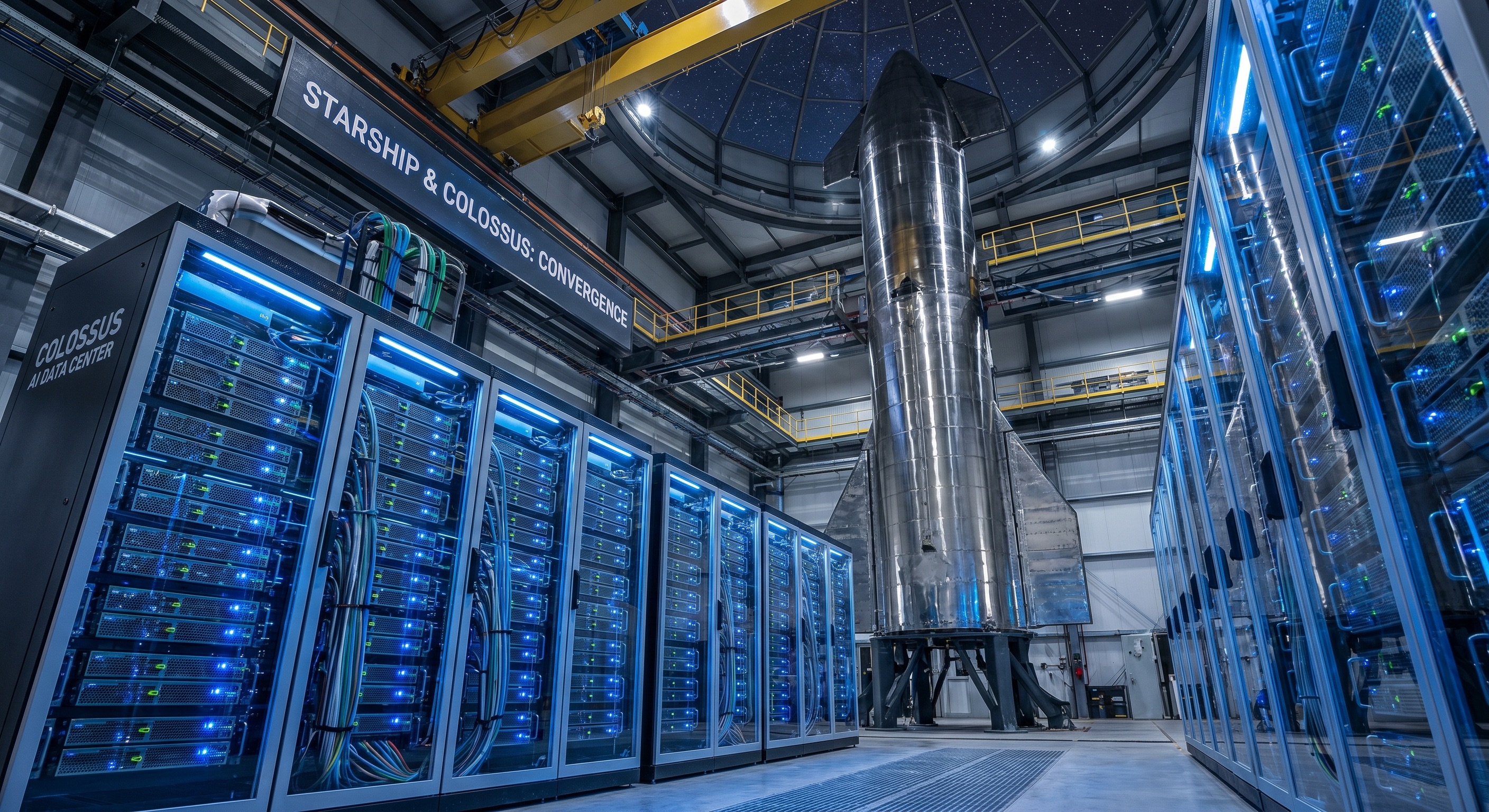
SpaceX has signed a compute agreement with Reflection AI worth up to $6.3 billion, granting the open-weight AI startup access to Nvidia GB300 chips at Colossus 2, SpaceX's data center complex in Memphis, Tennessee, starting July 1, 2026. At $150 million per month, it is one of the largest single GPU rental contracts disclosed to date. Either party can exit with 90 days' notice after the initial three-month period, according to sources cited by TechCrunch. The deal confirms SpaceX as a major commercial compute infrastructure provider, a role it has moved into at striking speed over the past year.
Reflection AI was founded in 2024 by researchers who previously worked at Google DeepMind. The startup is focused on open-weight models — AI models whose weights are publicly available for inspection, fine-tuning, and deployment — positioning itself as a counterpart to the proprietary frontier labs. The company has attracted attention from government and national security clients, including work connected to the Department of Energy and Pentagon AI initiatives. Despite a $25 billion valuation and Nvidia's backing as an investor, Reflection AI has not yet released a public frontier open-weight model, making this compute contract one of its highest-profile public signals that a major model launch is in preparation.
The GB300 — Nvidia's current-generation AI GPU, succeeding the H100 and H200 — is the primary chip powering the most compute-intensive frontier model training runs in 2026. Access to GB300 at scale remains constrained; waiting lists at major cloud providers stretch months. SpaceX's Colossus 2 facility in Memphis gives customers an alternative route to GB300 capacity at a time when training a competitive frontier model requires tens of thousands of them running continuously for weeks.
The Reflection AI deal is the latest in a series of external compute contracts SpaceX has signed in rapid succession. Anthropic pays approximately $1.25 billion per month for Colossus 2 capacity, and Google has committed $920 million per month. Cursor, the AI coding tool, is also a Colossus customer. SpaceX now has more than $80 billion in committed compute revenue signed across these agreements in roughly two months — a figure that rivals the annual revenue of most large cloud providers' AI divisions.
SpaceX entered the compute business through Grok and Colossus, the GPU cluster it built to train the Grok AI models. As Colossus expanded into Colossus 2 with additional capacity, SpaceX began offering unused and planned capacity to external customers at premium rates. The strategy has turned what started as internal AI infrastructure into a standalone business line generating tens of billions in contracted revenue — all without SpaceX operating as a traditional cloud provider or building public APIs for on-demand compute.
The implications for Reflection AI are significant. With $150 million per month in hardware costs, the startup needs to generate competitive model outputs that justify the spend — either through direct commercial deployment of its open-weight models or through government and enterprise contracts. The 90-day exit clause gives Reflection flexibility to renegotiate or walk away if its training runs complete ahead of schedule, but it also signals that both sides are treating this as a long-term arrangement: $6.3 billion in total payments over three years is not a trial.
The deal underscores how thoroughly the compute bottleneck has reshaped AI strategy. For a well-funded startup, access to the right GPUs — not algorithms, not data, not talent — is now the primary constraint on how fast it can build. Signing a multi-billion-dollar compute contract before releasing a public model is an unusual move that reflects both the scarcity of GB300 access and the competitive pressure to lock in capacity before rival labs do.
Originally reported by TechCrunch. Read the original article for additional details.
View original source